
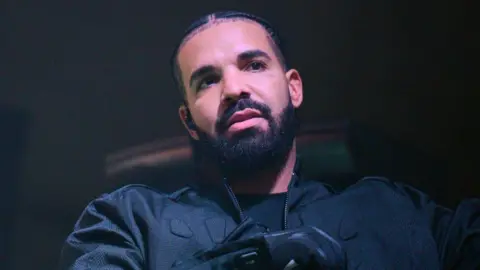
A judge has thrown out Drake's legal claim targeting Universal Music Group over Kendrick Lamar’s song the diss record.
Presiding Judge Jeannette Vargas determined that the rapper’s lyrics, which accused Drake and his associates of being "certified paedophiles", were "protected opinion" and could not be considered defamatory.
The Canadian rapper submitted the legal action in January, accusing UMG, the music company behind the two rappers, of defamation by permitting the song to be published and promoted, stating it disseminated a "untrue and harmful story".
The artist’s spokesperson stated he intended to challenge the ruling. Universal Music Group said it was satisfied with the outcome and was eager to resuming its collaboration with the rapper.
Background of the Hip-Hop Feud
Not Like Us, which was first dropped in spring 2024, was widely seen as the final strike in an ongoing battle between the competing artists.
It has emerged as the biggest hit of Lamar's career, having received multiple Grammy awards and being one of the most-discussed highlights of his Super Bowl half-time show in February.
In a 38-page order, the judge called the dispute between the artists "the most infamous rap battle in the genre's history".
"The artists' series of diss tracks was a 'war of words' that was the focus of extensive press coverage and online discourse," the court wrote.

"While the claim that Drake is a child predator is undoubtedly a serious one, the wider backdrop of a heated rap battle, with incendiary language and insulting claims hurled by each artist, would not incline the average audience to believe that 'the track' imparts truthful statements about plaintiff."
She additionally observed that, in an previous track, the artist had "dared his rival to make the paedophilia accusations" that featured in Not Like Us.
On the song his own release, the rapper used the AI-generated voice of the late rapper to suggest strategies on how to win the rap battle.
"Suggest he has a preference for minors, consider that a tip," the song proposed.
"Against this backdrop in which such lines as 'Hey Drake, I’ve heard you prefer them young' must be assessed," stated Judge Vargas.
"The parallel in the phrasing suggests strongly that this lyric is a direct callback to the artist’s own words in the earlier release."
'A Slap in the Face to Creatives'
The musician, whose legal name is Aubrey Graham, did not name Lamar in the lawsuit.
His legal team accused the label of initiating "an effort to generate a popular song" out of a track that made the "untrue claim that the artist is a convicted predator, and to suggest that the audience should turn to extra-legal action in response".
Deciding against the plaintiff, the judge said fans would not expect "accurate factual reporting" from a musical attack "replete with vulgar language, insults, violent implications, and figurative and hyperbolic language."
She pointed out that Drake himself had used similar language, quoting a lyric in which the star "strongly" implied that "Lamar is a spouse beater", and a separate instance where he "claims that he 'heard' that one of his rival’s children may not be biologically his."
Concerning Lamar's song, the court said: "Although apparent statements of fact may take on the nature of subjective views... when made in open discourse, heated labour dispute, or similar situations in which an audience may expect the use of slurs, fiery rhetoric or exaggeration."
Reacting to the dismissal, a UMG spokesperson said: "From the beginning, this lawsuit was an insult to all artists and their creative expression and never should have seen the light of day."
"We are satisfied with the court's dismissal and look forward to resuming our work successfully promoting Drake's music and investing in his artistic path," the spokesperson added.
A representative for Drake said the rapper intended to appeal the decision, "and we look forward to the appellate court reviewing it".
Lamar has yet to issue a statement on the legal matter.

